

Zircon jewelry
Handcrafted zircon necklaces, earrings, and bracelets, made to order in our Colorado studio. Set in sterling silver, 14K gold-fill, and solid 14K gold.
Shop zircon jewelry


Shop by category


About zircon
Zircon is a a zirconium silicate mineral, distinct from synthetic cubic zirconia, with refractive index and fire higher than most natural gemstones rated 7 on the Mohs hardness scale, Zircon rates 6 to 7.5 on the Mohs hardness scale, depending on the variety. For context, a steel nail is roughly 6.5, sapphire is 9, and diamond is 10. At 6 to 7.5, zircon is durable enough for everyday wear in necklaces, earrings, and bracelets, though the stone is brittle and faceted edges can chip if struck. Protective settings are recommended for rings. Clean with warm soapy water and a soft brush, and avoid ultrasonic and steam cleaners.. Its color ranges from naturally occurring in colorless, blue, yellow, golden, brown, red, and green, with blue being the most popular variety associated with December, with the most prized stones showing even saturation and high clarity.
Zircon is the oldest known mineral on Earth, with crystals from Australia's Jack Hills dated to 4.4 billion years old. The name likely comes from the Persian zargun, meaning gold-colored. Zircon has been used in jewelry for centuries and was historically valued as a diamond simulant for its high refractive index and dispersive fire. It is often confused with cubic zirconia, a synthetic diamond simulant, but the two are entirely different materials. Major sources include Cambodia, Sri Lanka, Thailand, Australia, and Myanmar.
Historically, zircon has been associated with wisdom, prosperity, and protection. In crystal healing and metaphysical traditions, zircon is associated with the Root and Crown Chakras. It is linked to grounded confidence, restful sleep, and spiritual clarity. Practitioners often use it as a stone for steady focus and good fortune, themes that align with December's contemplative end-of-year energy.
Zircon vs diamond
Same color family, different stones. Here's how to choose.
Zircon
Zircon and diamond are entirely different minerals. Diamond is pure crystalline carbon and rates 10 on the Mohs hardness scale; zircon is a zirconium silicate and rates 6 to 7.5. Despite the difference in hardness, colorless zircon has a refractive index and dispersive fire close to diamond, which is why it was historically used as a diamond alternative.
Diamond
Diamond is harder, more durable, and carries significant cultural weight along with much higher price points. Zircon offers similar sparkle and fire at a fraction of the cost, with the trade-off that it can chip more easily and requires more careful wear. Note that zircon is a natural gemstone and should not be confused with cubic zirconia, a synthetic diamond simulant.
Born in December?
Zircon is one of four modern birthstones for December December birthstones, alongside blue zircon, blue topaz, tanzanite, and turquoise are all modern birthstones for December. For people who follow birthstone jewelry traditions, blue zircon makes a brilliant gift for anyone born in December. Its sparkle rivals diamond thanks to a refractive index higher than most natural stones, the color reads as a clean ocean blue, and the stone is far less expensive than sapphire while offering more visible fire.
See all December birthstones on the December birthstone jewelry hub.
Shop December birthstone jewelryShop more
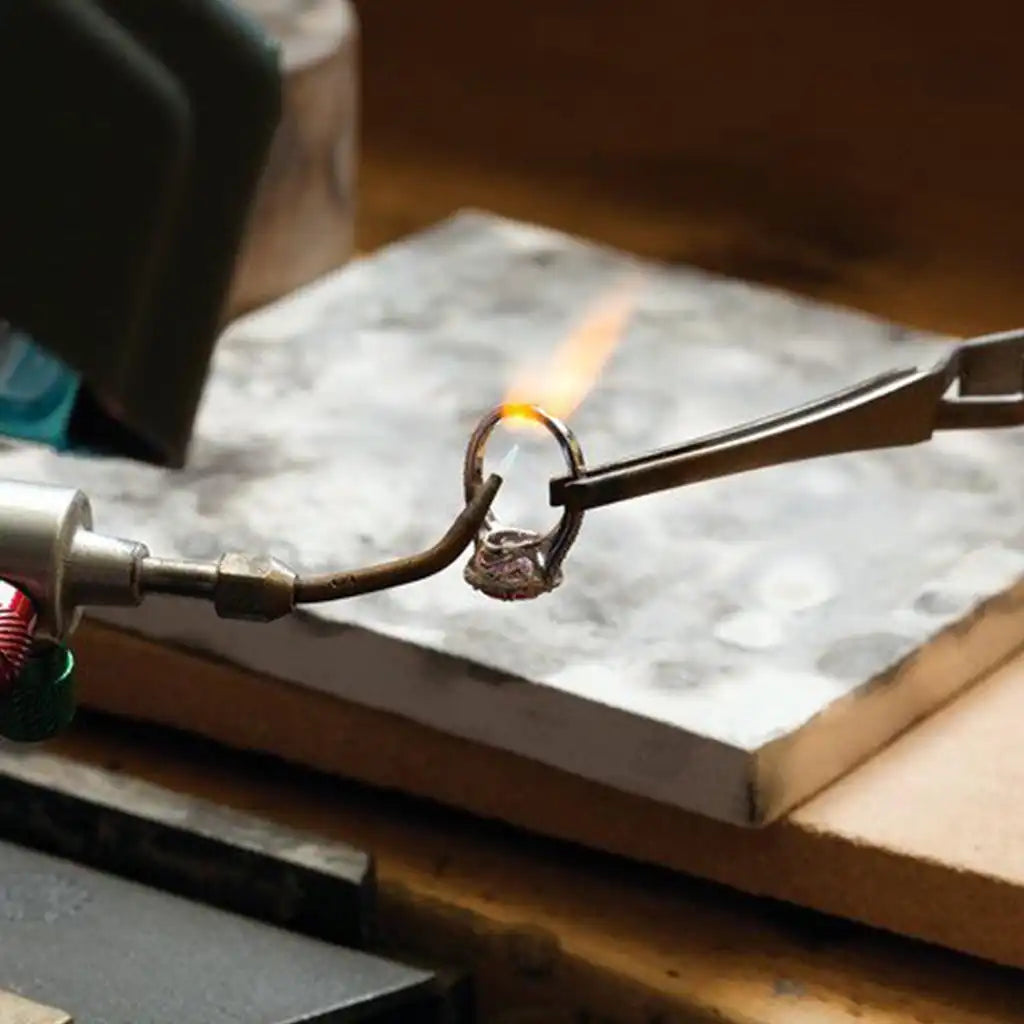

Made to order in Colorado
Every zircon piece is handcrafted to order in our Steamboat Springs studio, shipped in about 10 business days, and arrives in eco-friendly gift packaging.