

Peridot jewelry
Peridot necklaces, earrings, and bracelets, made to order. Set in sterling silver, 14K gold-fill, and solid 14K gold.
Shop peridot jewelry


Shop by category


About peridot
Peridot is a the gem-quality variety of olivine, a magnesium iron silicate mineral that forms deep in the Earth's mantle rated 7 on the Mohs hardness scale, Peridot rates 6.5 to 7 on the Mohs hardness scale. For context, a steel nail is roughly 6.5, sapphire is 9, and diamond is 10. At 6.5 to 7, peridot is durable enough for everyday wear in necklaces, earrings, and bracelets. Ring settings benefit from a bezel or protective mount. Avoid sudden temperature changes, ultrasonic cleaners, and prolonged contact with acids or harsh chemicals.. Its color ranges from yellowish-green to deep olive green, with the most prized stones showing a pure grass-green with no brown or yellow undertones, with the most prized stones showing even saturation and high clarity.
Peridot has been mined for over 3,500 years, with the earliest stones coming from Zabargad Island in the Red Sea. Ancient Egyptians called it the gem of the sun and believed it protected against nightmares. Some peridot has even arrived on Earth in pallasite meteorites, making it one of the few gemstones with an extraterrestrial origin. Today most peridot comes from Pakistan, Myanmar, China, Vietnam, and the San Carlos Apache Reservation in Arizona.
Historically, peridot has been associated with renewal, prosperity, and protection. In crystal healing and metaphysical traditions, peridot is associated with the Heart and Solar Plexus Chakras. It is linked to confidence, openness to abundance, and release of old patterns. Practitioners often use it as a stone for fresh perspective and emotional warmth, themes that align with August's late-summer energy.
Peridot vs emerald
Same color family, different stones. Here's how to choose.
Peridot
Peridot and emerald are entirely different mineral families. Emerald is a beryl and rates 7.5 to 8 on the Mohs hardness scale; peridot is an olivine and rates 6.5 to 7. Emerald's color comes from chromium and vanadium; peridot's comes from its core iron content, making it one of the few gemstones colored by an essential element of the mineral itself rather than a trace impurity.
Emerald
Emerald reads as a deeper, bluer green with visible inclusions and carries significantly higher price points; peridot reads brighter and more yellow-green at far more accessible pricing. If you are deciding between the two for green-gemstone jewelry, peridot offers a distinctive lime-green tone that is hard to find in any other stone.
Born in August?
Peridot is one of two modern birthstones for August August birthstones, alongside peridot and spinel are both modern birthstones for August. For people who follow birthstone jewelry traditions, peridot makes a vibrant gift for anyone born in August. Its lime-green tone is unlike any other green gemstone, the symbolism of renewal and abundance suits the late-summer season, and the stone is durable enough to wear every day.
See all August birthstones on the August birthstone jewelry hub.
Shop August birthstone jewelryShop more
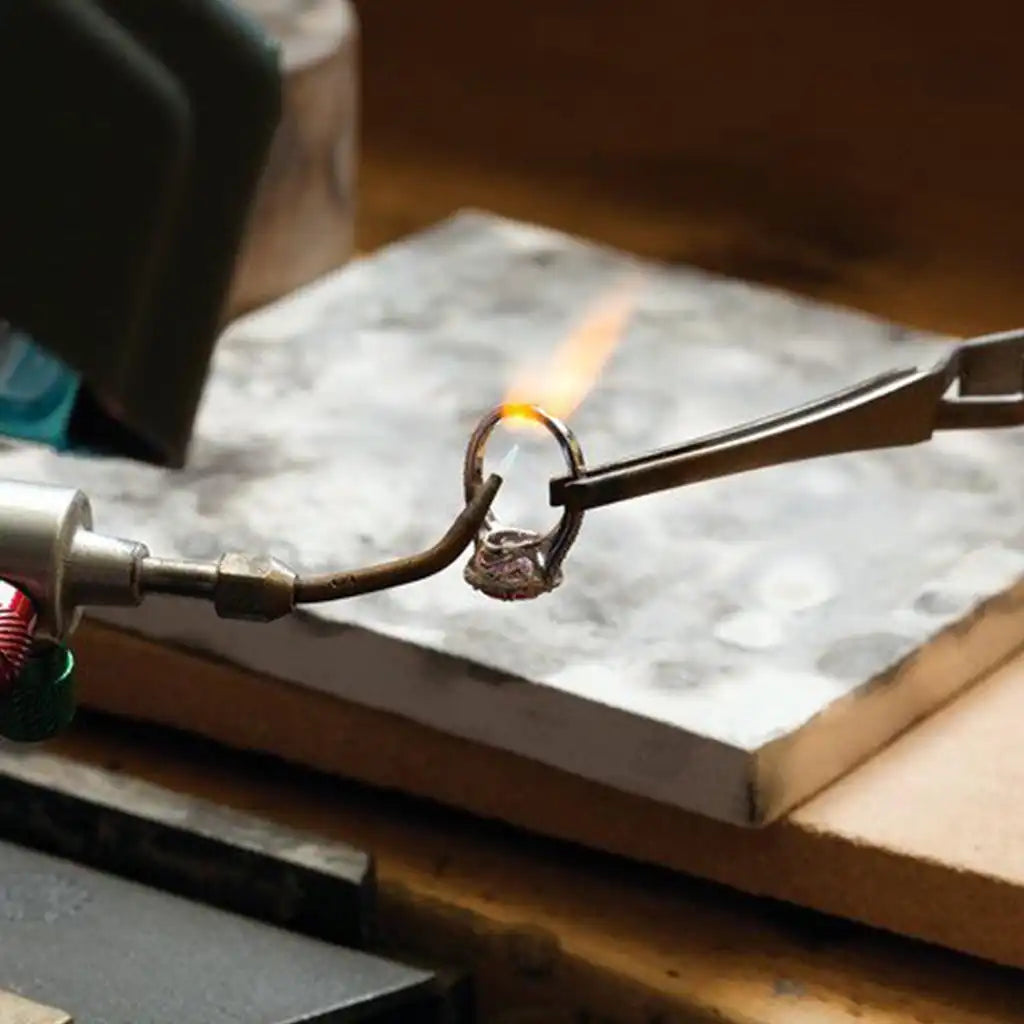

Made to order in the US
Every peridot piece is made to order, ships in 1 to 3 business days or 2 to 3 weeks depending on the piece, and arrives in eco-friendly gift packaging.