

Chrysoprase Jewelry
Handcrafted chrysoprase necklaces, earrings, and bracelets, made to order in our Colorado studio. Set in sterling silver, 14K gold-fill, and solid 14K gold.
Shop chrysoprase jewelry


Shop by category


About chrysoprase
Chrysoprase is a a green variety of chalcedony, a cryptocrystalline form of quartz, colored by trace amounts of nickel rated 7 on the Mohs hardness scale, Chrysoprase rates 6 to 7 on the Mohs hardness scale. For context, a steel nail is roughly 6.5, sapphire is 9, and diamond is 10. At 6 to 7, chrysoprase is in similar territory to tanzanite and softer than emerald or aquamarine. Everyday wear is fine with reasonable care in necklaces, earrings, and bracelets. Ring stones benefit from a bezel or protective setting, and prolonged sunlight exposure can fade the color over time.. Its color ranges from apple-green to deep green, with a milky translucency that gives the stone a soft inner glow, with the most prized stones showing even saturation and high clarity.
Chrysoprase takes its name from the Greek chrysos, meaning golden, and prason, meaning leek, a reference to its golden-green tones. It was prized by ancient Greeks and Romans, and was a documented favorite of Alexander the Great. Frederick the Great of Prussia used chrysoprase to decorate the Sanssouci Palace at Potsdam. Today most chrysoprase comes from Queensland, Australia, where the finest apple-green material is mined, along with deposits in Brazil, Indonesia, and Tanzania.
Historically, chrysoprase has been associated with joy, new beginnings, and emotional clarity. In crystal healing and metaphysical traditions, chrysoprase is associated with the Heart Chakra. It is linked to emotional clarity, self-acceptance, and letting go of patterns driven by ego rather than genuine feeling. Practitioners often use it as a stone for forgiveness and opening to growth, themes that align naturally with spring and the May birthstone season.
Chrysoprase vs emerald
Same color family, different stones. Here's how to choose.
Chrysoprase
Emerald and chrysoprase are entirely different mineral families. Emerald is a beryl and rates 7.5 to 8 on the Mohs hardness scale; chrysoprase is a chalcedony and rates 6 to 7. Emerald's color comes from chromium and vanadium; chrysoprase's comes from nickel.
Emerald
Emerald tends toward a deeper, richer green with visible inclusions, and carries significantly higher price points; chrysoprase reads cleaner and lighter with a milky translucency at a much more accessible cost. If you are deciding between the two for May birthstone jewelry, chrysoprase offers the green-stone story without the premium investment.
Born in May?
Chrysoprase is an alternative May birthstone alongside emerald May birthstone. For people who love the color green but prefer a softer tone or a lower price point than emerald, chrysoprase is a natural fit for May birthday jewelry. Its apple-green color reads fresh and modern, the symbolism of new beginnings suits the spring season, and the stone is meaningful enough to gift while remaining everyday-wearable.
See all May birthstones on the May birthstone jewelry hub.
Shop May birthstone jewelryShop more
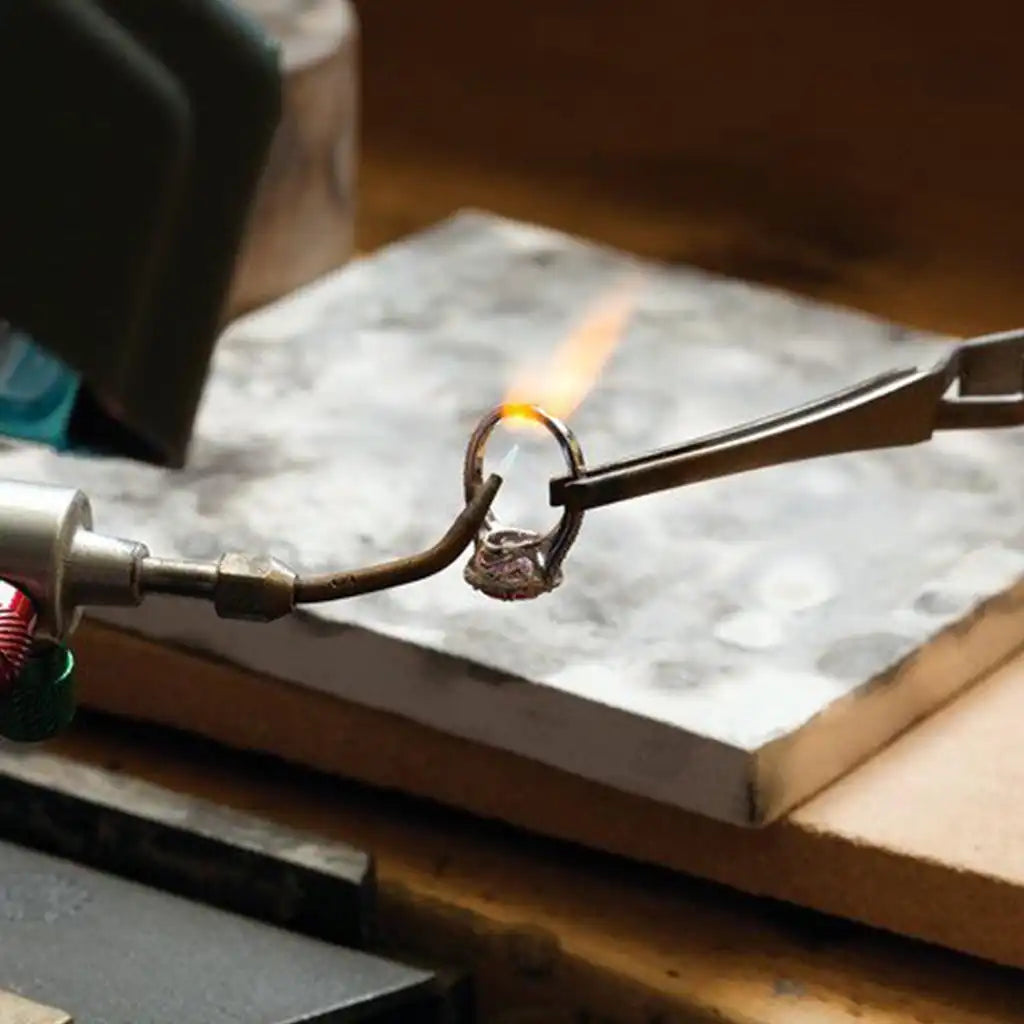

Made to order in Colorado
Every chrysoprase piece is handcrafted to order in our Steamboat Springs studio, shipped in about 10 business days, and arrives in eco-friendly gift packaging.