

Opal jewelry
Opal necklaces, earrings, and bracelets, made to order. Set in sterling silver, 14K gold-fill, and solid 14K gold.
Shop opal jewelry


Shop by category


About opal
Opal is a a hydrated form of silica, between 3 and 21 percent water by weight, with play-of-color caused by light diffracting off internal silica spheres rated 6 on the Mohs hardness scale, Opal rates 5.5 to 6.5 on the Mohs hardness scale, making it one of the softer gemstones. For context, a steel nail is roughly 6.5, sapphire is 9, and diamond is 10. Opal also contains water, which makes it sensitive to temperature changes and dehydration. Avoid ultrasonic cleaners, harsh chemicals, and prolonged dry heat. Clean with a soft cloth and lukewarm water. Ring settings benefit from a protective bezel.. Its color ranges from white or black body color with flashes of every color of the rainbow, an effect called play-of-color, as well as solid orange-red fire opal varieties, with the most prized stones showing even saturation and high clarity.
Opal has captivated cultures for thousands of years, with the Romans calling it cupid paederos, child of love. The name comes from the Latin opalus and the Greek opallios, meaning to see a change in color. Australia produces the vast majority of the world's precious opal, with Lightning Ridge famous for black opal and Coober Pedy for white opal. Ethiopian opal, discovered more recently, has added new color profiles to the market.
Historically, opal has been associated with creativity, emotional expression, and imagination. In crystal healing and metaphysical traditions, opal is associated with the Crown Chakra and creative inspiration. It is linked to emotional honesty, intuition, and bringing hidden qualities to light. Practitioners often use it as a stone for artistic work and self-discovery, themes that align with October's introspective transition into autumn.
Opal vs moonstone
Same color family, different stones. Here's how to choose.
Opal
Opal and moonstone are different minerals but share a similar luminous quality. Opal is hydrated silica and rates 5.5 to 6.5 on the Mohs hardness scale; moonstone is a feldspar and rates 6 to 6.5. Opal shows play-of-color across the full spectrum from light diffracting through silica spheres; moonstone shows adularescence, a single soft blue or white glow that floats just beneath the surface.
Moonstone
Opal is more dramatic, with multiple colors visible at once and significantly higher price points for fine pieces, especially black opal. Moonstone reads as a single soft glow at more accessible cost. If you are deciding between the two for a luminous stone, opal offers the rainbow spectrum; moonstone offers a subtler, more ethereal look.
Born in October?
Opal is one of two modern birthstones for October October birthstones, alongside opal and tourmaline are both modern birthstones for October. For people who follow birthstone jewelry traditions, opal makes a distinctive gift for anyone born in October. Its play-of-color is unlike any other gemstone, with flashes of multiple colors from a single stone, and the symbolism of creativity and emotional expression gives it personal weight. Opal requires gentler care than harder stones, which suits people who appreciate something a little out of the ordinary.
See all October birthstones on the October birthstone jewelry hub.
Shop October birthstone jewelryShop more
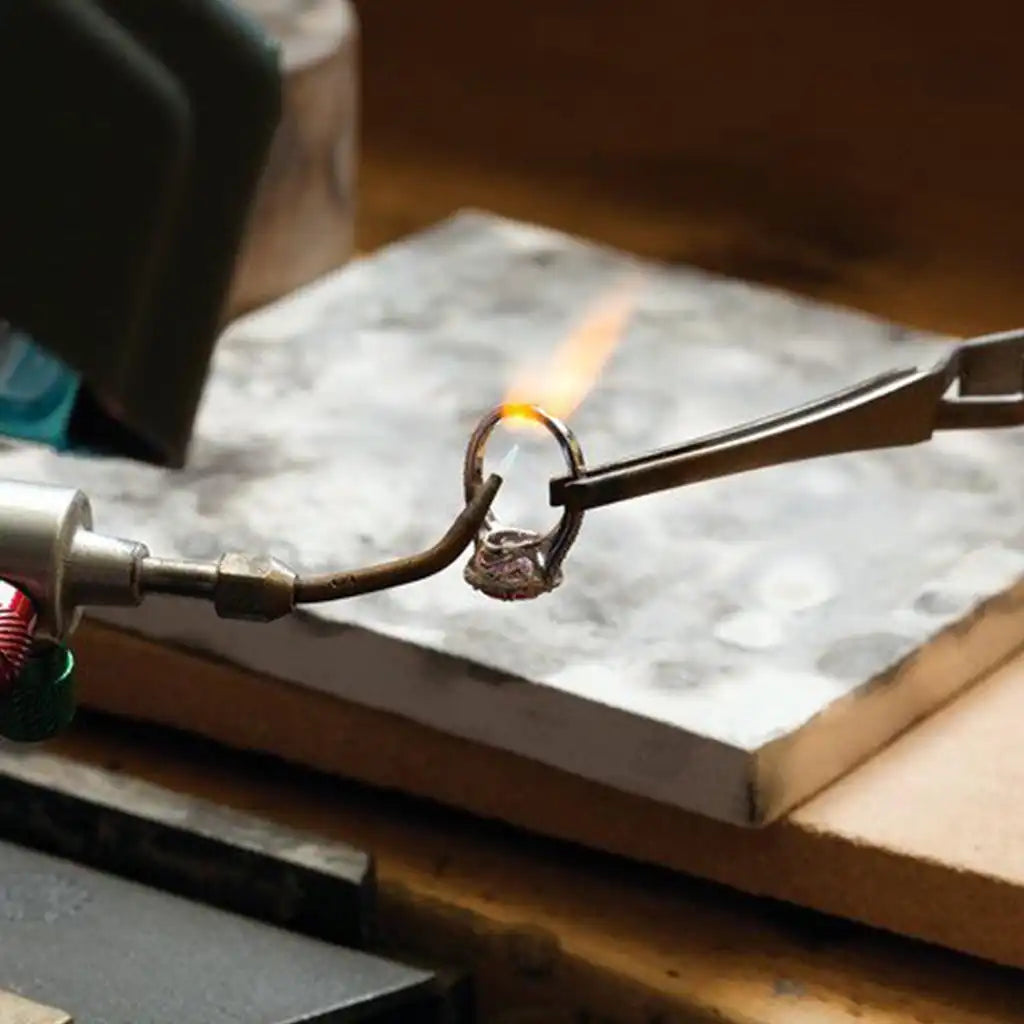

Made to order in the US
Every opal piece is made to order, ships in 1 to 3 business days or 2 to 3 weeks depending on the piece, and arrives in eco-friendly gift packaging.