


Amethyst jewelry
Amethyst necklaces, earrings, and bracelets, made to order. Set in sterling silver, 14K gold-fill, and solid 14K gold.
Shop amethyst jewelry


Shop by category


About amethyst
Amethyst is a a violet variety of quartz, colored by iron impurities and natural irradiation rated 7 on the Mohs hardness scale, Amethyst rates 7 on the Mohs hardness scale, the same as all quartz varieties. For context, a steel nail is roughly 6.5, sapphire is 9, and diamond is 10. At 7, amethyst handles regular wear well as a necklace, earrings, or bracelet. Prolonged exposure to direct sunlight can fade the color over time, so store amethyst jewelry away from sunny windows.. Its color ranges from violet to deep purple, ranging from pale lavender to rich royal purple with occasional reddish undertones, with the most prized stones showing even saturation and high clarity.
Amethyst takes its name from the Greek amethystos, meaning not drunken, after an ancient belief that the stone protected its wearer from intoxication. The Greeks and Romans carved it into drinking vessels and signet rings. For centuries amethyst was as valuable as ruby and emerald until vast deposits were discovered in Brazil in the 19th century. Today most amethyst comes from Brazil, Uruguay, Zambia, and Madagascar.
Historically, amethyst has been associated with calm, clarity, intuition, and protection. In crystal healing and metaphysical traditions, amethyst is associated with the Third Eye and Crown Chakras. It is linked to mental clarity, restful sleep, and spiritual awareness. Practitioners often use it as a stone for meditation and emotional balance, themes that align with February's introspective quality.
Amethyst vs tanzanite
Same color family, different stones. Here's how to choose.
Amethyst
Amethyst and tanzanite are entirely different mineral families. Tanzanite is a variety of zoisite and rates 6 to 7 on the Mohs hardness scale; amethyst is a variety of quartz and rates 7. Tanzanite's blue-violet comes from vanadium after heat treatment; amethyst's purple comes from iron and natural irradiation.
Tanzanite
Tanzanite reads as a cooler blue-violet with strong pleochroism, meaning it shows different colors from different angles, and carries a much higher price point given its single source in Tanzania. Amethyst sits in warmer purple territory at far more accessible pricing. If you are choosing between the two for a purple gemstone, amethyst is the more durable and affordable choice.
Born in February?
Amethyst is the modern birthstone for February February birthstone. For people who follow birthstone jewelry traditions, amethyst makes a thoughtful gift for anyone born in February. Its violet tones flatter every skin tone, pair beautifully with both gold and silver, and the symbolism of calm and clarity makes it as meaningful as it is wearable.
See all February birthstones on the February birthstone jewelry hub.
Shop February birthstone jewelryShop more
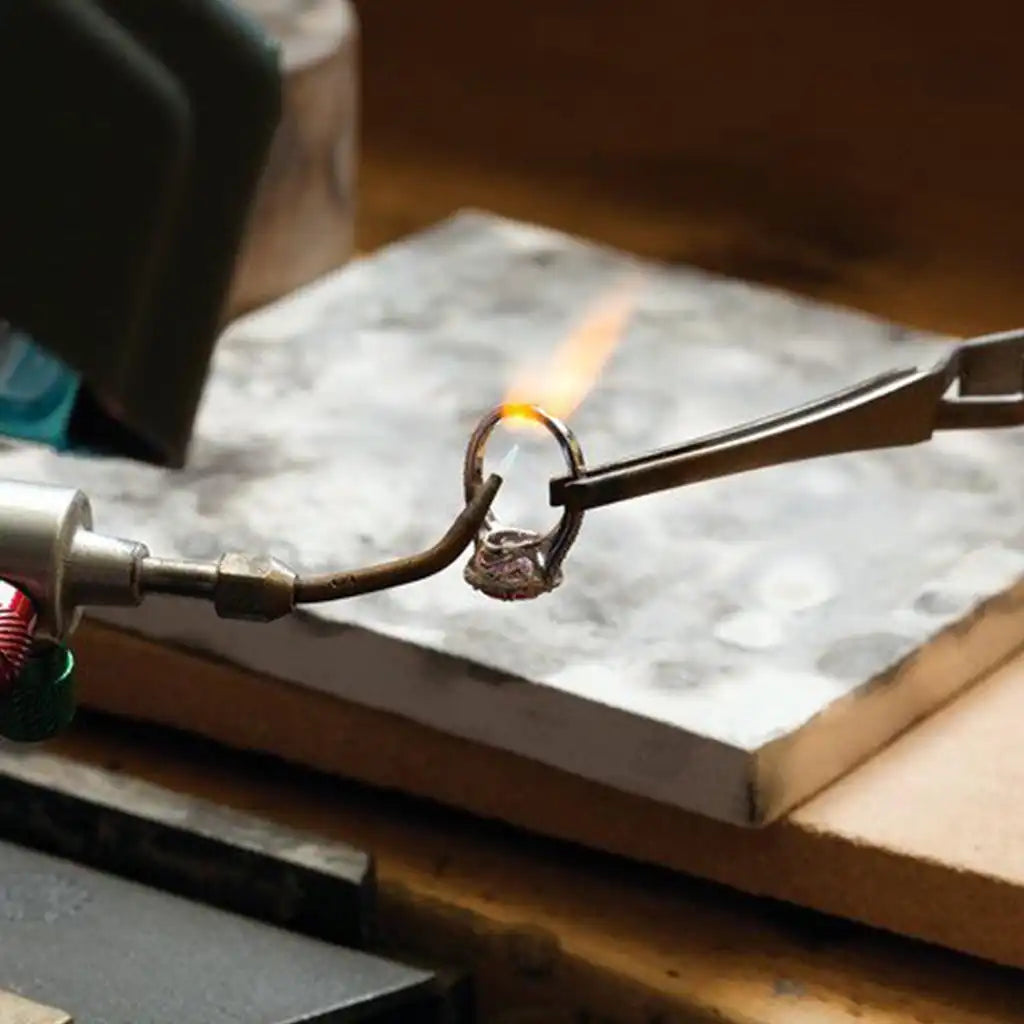

Made to order in the US
Every amethyst piece is made to order, ships in 1 to 3 business days or 2 to 3 weeks depending on the piece, and arrives in eco-friendly gift packaging.